Ski pants sound straightforward — they’re just the pants you wear on the mountain, right? But walk into any gear shop or browse any ski-brand website and you’ll immediately hit a wall of choices that seem designed to confuse: softshell, hardshell, insulated, fleece-lined, Gore-Tex, 2L, 3L, bib, waist. For a gift buyer, this is one of the easier purchases to get wrong and one of the most satisfying to get right. The recipient will wear these on every ski day for years. A quick breakdown of the core decision — softshell vs. insulated, and whether a fleece lining (a brushed interior layer sewn into the pant itself) actually helps — makes the choice dramatically cleaner. This guide works through that decision frame, names real tradeoffs, shows the math, and ends with a rule you can apply in under two minutes.
| EDITOR'S PICK[Outdoor Ventures Fleece Lined W…](https://www.amazon.com/dp/B081N7RF35?tag=greenflower20-20) | Mid-tier33 | Budget pick[Gash Hao Mens Snow Ski Waterpro…](https://www.amazon.com/dp/B07HMDLXRZ?tag=greenflower20-20) | |
|---|---|---|---|
| Insulation type | Fleece lined | Insulated | Fleece lined |
| Boot cut | ✓ | — | — |
| Zipper bottom leg | — | — | ✓ |
| Price | $49.99 | $49.99 | $43.99 |
| See on Amazon → | See on Amazon → | See on Amazon → |
The Core Tradeoff: Softshell vs. Insulated Ski Pants
Start here, because every other question is downstream of this one.
Softshell: Maximum Mobility, Layering Required
Softshell ski pants are built around a stretchy, weather-resistant outer fabric — typically a woven or bonded textile with a Durable Water Repellent (DWR) finish — but contain no built-in insulation. They block wind and light moisture while allowing remarkable freedom of movement. The recipient layers their own mid-layer (usually thermal base layer leggings or a lightweight fleece pant) underneath on colder days and skis without that underlayer on warmer ones.
REI Co-op Learn, in their guide “How to Choose Ski Pants,” describes softshells as the go-to choice for high-output activities like ski touring, mogul skiing, and resort days above 20°F. The stretch factor is significant: softshell fabrics like Polartec PowerShield — a technical stretch-woven textile that manages moisture while blocking wind — or brand-proprietary 4-way-stretch wovens allow a range of motion that traditional ski pants often can’t match.
The gifting angle matters. If you’re buying for someone who skis hard, sweats, and manages their own kit, softshell is probably the right call. If you’re buying for a casual resort skier, someone who runs cold, or anyone who just wants to zip on a pant and go, insulated wins on simplicity alone.
Gash
$43.99
In stock on Amazon
Check price on AmazonMid-Tier: Fleece-Lined Softshell, the Needle-Threader
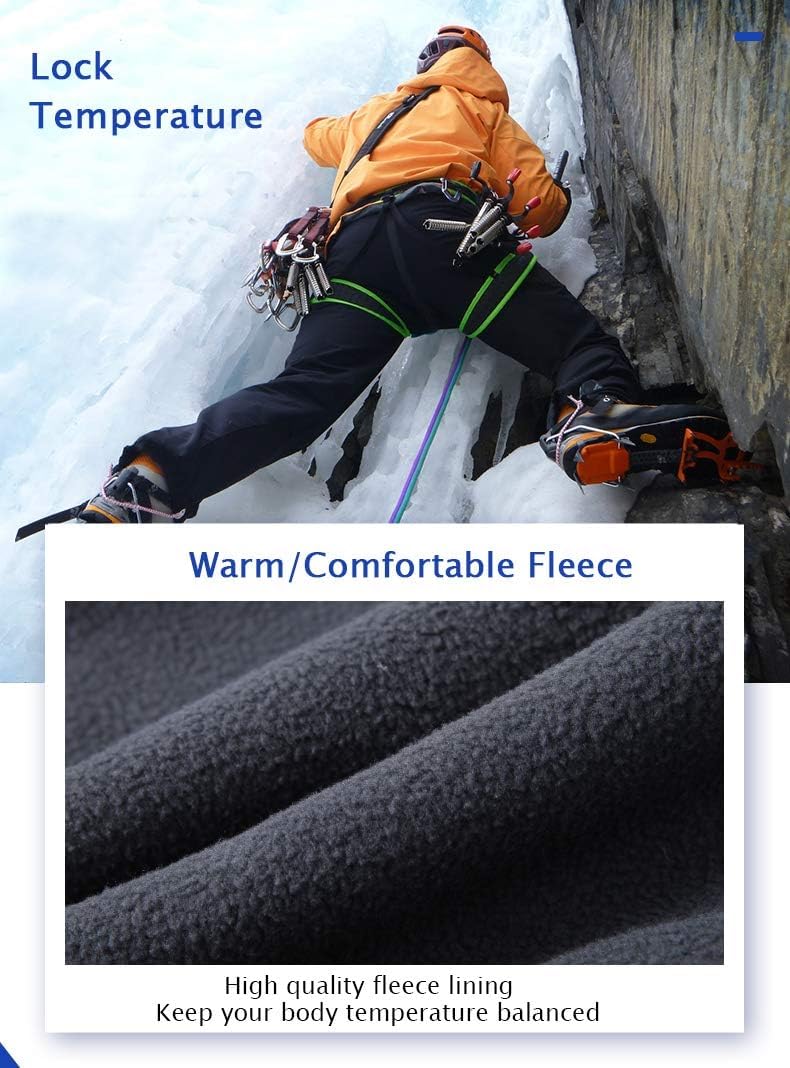
A fleece-lined ski pant has a brushed or pile interior — imagine the inside of a softshell jacket that feels like a lightweight blanket against skin. This is different from insulation: fleece lining adds tactile warmth and wicking comfort, but it doesn’t trap heat the way synthetic fill does. It’s a comfort upgrade more than a temperature-rating upgrade.
Snowbrains, in their guide “Layering for Cold-Weather Skiing: A Complete Guide,” draws a useful distinction: fleece-lined pants feel warmer at the same measured temperature because the soft interior pulls moisture away from skin faster and doesn’t feel clammy the way a plain nylon liner does. Owners of fleece-lined softshells consistently report that the lining eliminates the need for a separate base layer in moderate conditions — roughly 20°F to 40°F — which simplifies the gift equation considerably.
Gear Junkie’s analysis “Softshell vs. Hardshell Ski Pants: Which Is Right for You?” notes that the fleece-lined softshell category has become the dominant mid-tier offering precisely because it threads the needle for the widest range of resort skiers — enough warmth for a cold morning chair ride, enough breathability to survive a sunny afternoon groomer session.
When fleece lining makes the gift better:
- The recipient is a recreational skier who won’t build a layering system from scratch
- The gift budget is in the $180–$350 range, where fleece-lined softshells live
- Skiing happens primarily in variable conditions (morning groomers plus afternoon sun is a classic scenario)
When fleece lining is the wrong move:
- The recipient is a backcountry tourer or high-output skier — fleece lining can become a sweat trap
- The recipient already owns base layer leggings they’re loyal to and layers intentionally
- The gift is for spring skiing or a Southern Hemisphere trip, where overheat risk is real
 product image](/images/external/fadc70416ed5.jpg)
33,000ft
$49.99
In stock on Amazon
Check price on AmazonPremium: Insulated Pants and 3-Layer Construction
Insulated ski pants have a layer of synthetic fill — typically 40g to 100g of PrimaLoft or brand-equivalent — sewn directly between the outer shell and the inner lining. You put them on and you’re already warm without thinking about it. Outside Online’s 2025 roundup “Best Ski Pants of 2025” consistently flags insulated pants as the better default for resort skiers, cold-climate gift recipients, and anyone who doesn’t want to manage a separate underlayer system. The tradeoff: once you’re warm, you’re warm — there’s no venting the insulation off when the sun comes out or when you’re hiking a skin track.
At the top of the market, 3-layer Gore-Tex Pro construction laminates the membrane directly to the outer face fabric and the inner liner, eliminating separate layers and producing a noticeably sleeker, more packable pant. REI Co-op Learn notes in “How to Choose Ski Pants” that 3-layer construction is the correct choice for ski guides, patrollers, and backcountry travelers who spend full days in variable alpine weather, while acknowledging it’s overkill for most resort skiers. For a gift, this tier reads as a serious, considered purchase rather than a generic gesture.
Powder Magazine’s 2025–26 roundup “The Best Ski Pants for Every Type of Rider” identifies the $250–$400 range — fully taped seams, 2-layer Gore-Tex or equivalent — as the sweet spot for serious resort skiers and lift-accessed backcountry riders. The waterproofing holds through a full storm day, the articulated patterning supports athletic movement, and reinforced cuffs survive regular boot abrasion.

Outdoor
$49.99
In stock on Amazon
Check price on AmazonBy the Numbers: A Quick Decision Matrix
Understanding where price actually goes — and what it buys — is the second thing most gift buyers get wrong. The jump from $150 to $400+ is almost never about warmth. It’s about waterproofing technology and seam construction.
| Pant Type | Built-in Warmth | Breathability | Layering Flex | Best Temp Range | Typical Gift Price |
|---|---|---|---|---|---|
| Softshell, unlined | None | High | High | 25°F–50°F+ | $150–$300 |
| Gash — $43.99 Softshell + Fleece Lining | Low–Medium | Medium–High | Medium | 20°F–40°F | $180–$350 |
| 33,000ft — $49.99 Insulated, 40–60g fill | Medium | Medium | Low | 10°F–30°F | $200–$400 |
| Outdoor — $49.99 Insulated, 80–100g fill | High | Low | Low | −10°F–20°F | $250–$500+ |
Fill weights and temperature ranges reflect published manufacturer specifications. Price ranges reflect 2026 mid-season retail across major alpine brands.
At the $150–$250 tier, you’re typically getting a DWR-treated outer fabric with taped critical seams — the seams that face direct snow contact. REI Co-op Learn describes “critically taped” construction as covering the most snow-exposed seams but not every seam in the garment. These pants handle a lift line and a powder morning fine; they start to wet out after sustained heavy snowfall or a deep tree run.
At $250–$400, fully taped seams and a 2-layer waterproof-breathable membrane enter the picture. This is where most of the best gift picks for the intermediate-to-advanced skier live.
At $400–$600+, 3-layer Gore-Tex Pro territory produces a noticeably sleeker, more packable pant appropriate for guides, patrollers, and committed backcountry users.
Bib vs. Waist, Sizing, and the One Question to Ask Before You Buy
Bib vs. Waist Pants
Bib pants — pants with a chest panel and shoulder straps, like overalls — run $30–$80 more than equivalent waist pants within the same line. The premium is worth it for deep-powder skiers and backcountry users: the bib eliminates the gap between jacket hem and pant waist that fills with snow in a face-plant. For a groomer-focused resort skier, the waist pant is simpler and usually preferred. Knowing which style the recipient favors is the most useful pre-purchase research you can do.
Sizing Logic for Ski Pants
Ski pants don’t follow standard clothing sizing logic, and this is where well-meaning gifts go sideways. Most brands size by waist-and-inseam (S/M/L with fixed inseams, or numeric waist with a short/regular/long inseam option). The complication: ski pants are designed to be worn over a base layer and to accommodate the forward-crouching stance of skiing — they’re cut longer in the rise and roomier in the seat and thigh than street pants in the same size.
REI Co-op Learn’s pants-sizing guidance recommends measuring recipients by their regular outdoor pant waist size and going up one size if they plan to layer beneath. Powder Magazine’s editorial team notes that fit is the one spec that can’t be returned to spec sheets — length in particular matters, because too-short pants expose boot tops to snow ingress, while too-long pants get chewed up by ski boot buckles.
The One Question to Ask
“What’s your regular pant waist size, and do you usually run warm or cold?”
Warm runners get the softshell or the lightly insulated option. Cold runners get the 60g–100g fill or the fleece-lined softshell. That single temperature-preference data point cuts the decision tree in half and eliminates the most common gift miss in this category.
The Decision Rule
Here’s the clean if/then framework for anyone with a gift decision pending.
If the recipient skis hard, moves a lot, and manages their own kit: buy a high-quality unlined softshell with fully taped seams in the $250–$350 range. Technically oriented softshells in this price band consistently draw praise from owners for durability and articulation, and they pair cleanly with whatever base layer system the recipient already uses.
If the recipient is a recreational resort skier who wants simplicity: buy a fleece-lined softshell or a lightly insulated pant (40–60g fill) in the $180–$300 range. This category covers the widest range of typical ski days and requires zero layering strategy from the wearer. Outside Online’s 2025 roundup “Best Ski Pants of 2025” repeatedly returns to this tier as the right default for gift buyers who don’t have detailed intelligence on the recipient’s kit.
If the recipient skis in genuinely cold conditions — sustained temperatures below 15°F, Midwest or Northeast resort skiing, or regular night skiing: buy an insulated pant with 80g+ fill, or pair a quality softshell with a separate thermal underlayer as a two-piece gift set. The two-piece approach is actually the more versatile and often more welcome gift for a recipient who already has strong opinions about their kit.
If the gift budget is $400+: go 3-layer Gore-Tex Pro waist or bib pant for a backcountry user, or use the budget to step up to a premium insulated bib for a resort skier who values maximum comfort. At this tier, the construction justifies the spend and the recipient will know it immediately.
The fleece-lining question answers itself once you’ve sorted the warmth tier: if the pant already has meaningful insulation (60g+), the fleece lining adds cost without proportional benefit. If the pant is an unlined or lightly insulated softshell, a fleece interior is a genuine quality-of-life upgrade that experienced owners routinely mention as the detail that keeps them reaching for one pant over another on cold mornings.
Get the warmth tier right, match the construction level to how often and how hard the recipient skis, and the specific brand pick almost takes care of itself.