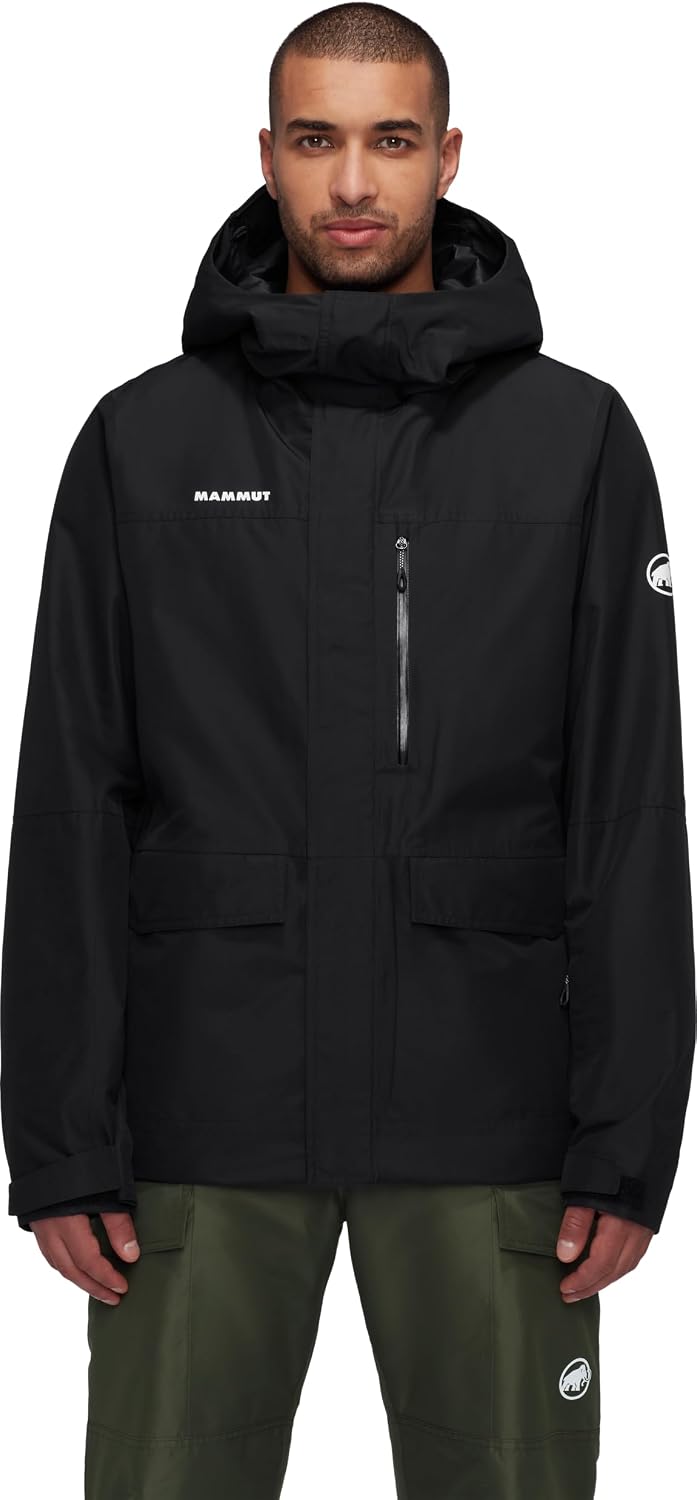
Buying a ski jacket as a gift feels more complicated than it should be. The hang tags are full of numbers — “600-fill,” “20K waterproofing,” “PrimaLoft Gold” — that mean nothing if you haven’t spent time in gear shops or read through a season’s worth of reviews. At its core, an insulated ski jacket does two jobs: it keeps the wearer warm by trapping body heat (the “insulation” part — either down feathers or synthetic fiber), and it keeps wind and snow out (the “waterproofing” part, usually rated in millimeters of water pressure it can resist). The tradeoff you’re always managing is warmth-to-bulk ratio and breathability: a jacket that’s warm enough for a lift-served groomer day in Vermont is probably not the right call for a week of backcountry touring in the Wasatch, and vice versa.
This guide cuts through four price tiers — roughly $100, $200, $300, and $400-plus — and names the tradeoffs at each. If you’re buying for yourself, a ski-obsessed partner, a corporate retreat attendee, or a lodge guest who expects something thoughtful under the tree, the decision frame here will get you to the right tier fast. We’ll name specific jackets where the spec sheet and aggregated owner feedback justify the call. We won’t pretend we’ve skied in every one of them.
Why Price Tiers Actually Mean Something Here
A lot of gear categories have inflated premiums for branding alone. Ski jackets aren’t totally innocent, but at each major price step there’s a meaningful spec jump that owners actually notice.
By the numbers — what you’re buying at each tier:
| Price tier | Waterproof rating (typical) | Insulation type | Fill power / g/m² | Key trade-off |
|---|---|---|---|---|
| ~$100 | 5K–10K mm | Synthetic | 80–100 g/m² | Warmth-to-weight is low; bulkier |
| ~$200 | 10K–15K mm | Synthetic or 600-fill down | 100–120 g/m² | Good all-around; often lacks pit-zips |
| ~$300 | 15K–20K mm | 700–800-fill down or premium synthetic | 120–140 g/m² | Notable warmth-to-weight jump |
| $400+ | 20K–28K mm | 800–900-fill down or Polartec Alpha | Best-in-class | Athlete-grade; gifter pays for longevity |
Sources: published spec sheets compiled by REI Co-op’s ski jacket guide and Gear Junkie’s 2025–26 roundup.
The waterproof rating (that millimeter number) tells you how much standing water pressure the fabric resists before it soaks through. Anything under 10K is adequate for light snow and groomed runs. Serious storm days and wet spring snow start to expose jackets below 15K — which is exactly the complaint owners report in one-star reviews of entry-level shells. That’s the single most useful number for gift-buying context.
The $100 Tier: Crowd-Pleaser Territory
This is the sweet spot for a first ski jacket — a gift for the person who just bought a season pass, is trying alpine skiing for the first time, or needs a backup layer for a single lodge weekend. Don’t expect miracles, but the right pick here is genuinely functional.
What the money buys: Synthetic insulation (heavier, less packable than down, but it keeps you warm even when wet — an important practical advantage for beginners who fall in snow), a waterproof rating in the 5K–10K range, and a basic lift-pass pocket. Reviewers at Gear Junkie consistently note that the Columbia Whirlibird IV shows up as the reliable recommendation in this tier — owners report its Omni-Heat lining produces noticeably more warmth than bare synthetic at the same price point, and Columbia’s sizing runs true, which matters when you’re buying without trying on.
What you’re giving up: Packability. Breathability. Pit-zips (ventilation zippers under the arms that dump heat on sweaty climbs — you won’t find them here). At 10K waterproofing, a day of heavy wet snow will eventually push moisture through the face fabric. That’s not a defect; it’s physics.
Gift logic: If the recipient is an occasional resort visitor or a newcomer to skiing, the $100 tier delivers. If they’re already posting powder shots to their feed, skip this tier entirely — you’ll get eye-rolls, not gratitude.
The $200 Tier: The Honest Workhorse
This is where the editorial recommendation gets more consistent across outside sources. The Wirecutter / New York Times ski jacket review (updated 2025) lands its “best for most people” pick in this range, and Outside Online’s insulated ski jacket roundup agrees in spirit: this tier covers a full season at a resort without constant compromise.
The spec jump is real. Waterproof ratings hit 15K, seam-sealing (the glued or tape-covered stitching that stops water from leaking through needle holes) becomes standard, and you start seeing either quality synthetic insulation — PrimaLoft Gold or Thermoball — or entry-level down (600-fill). Fill power, by the way, is a measure of how much space one ounce of down occupies: higher numbers mean lighter insulation for the same warmth. At 600-fill you’re not at expedition territory, but the warmth-to-weight ratio is noticeably better than anything in the $100 tier.
Recommended picks in this range:
-
Patagonia Nano Puff Jacket ($229 at time of writing): Owners report it’s not purpose-built as an outerwear ski jacket — no helmet-compatible hood design, modest waterproofing — but as a mid-layer or resort lift-riding jacket in moderate conditions, it gets outstanding marks for packability and versatility. Powder Magazine’s buyer’s guide notes it’s one of the few jackets that transitions naturally from the mountain to the airport.
-
The North Face ThermoBall Eco Jacket: Synthetic insulation that mimics down’s loft, 15K-rated shell fabric, and a notably packable form factor. Owners in aggregated reviews flag the hand-pockets as generously sized — a small thing that matters in real resort use.
Gift logic: This is the correct tier for a serious recreational skier who doesn’t yet own a dedicated ski jacket, a corporate retreat attendee gift, or a lodge guest welcome package where you want quality without over-indexing on spend. The $200 tier says “I did the research”; the $100 tier says “I grabbed something.”
The $300 Tier: Where Gifting Gets Impressive
Jump to $300 and two things happen simultaneously: insulation quality climbs meaningfully, and shell fabrics start using branded waterproof membranes — Gore-Tex or proprietary equivalents rated at 20K — that perform noticeably better in prolonged exposure to wet snow. Gore-Tex, in plain terms, is a membrane laminated between the jacket’s outer fabric and inner lining; its microscopic pores block liquid water while letting water vapor (sweat) escape outward. That breathability improvement is real and owners consistently note it in long-run reviews.
The case for Arc’teryx Atom LT in this context: The Atom LT (~$330 retail) runs just above the $300 line but belongs in this tier conversation. It uses Coreloft Compact synthetic insulation — manufacturer-rated for high-output activities — and a lightweight Tyono shell. Gear Junkie’s reviewers flag it as an exceptional mid-layer or active-use jacket rather than a storm-day beater; it’s not the warmest jacket in this tier, but owners report wearing it more days per year than anything else in their kit. For the gifting context: this is a jacket a serious skier or alpine hiker will actually use, not retire to the back of the closet.
Arc’teryx Thorium AR (~$400): Technically crosses into the next tier but worth mentioning here — 750-fill down, 20K shell, helmet-compatible hood, and a cut designed for climbing harness compatibility (meaning it sits high on the torso and doesn’t bunch under a pack’s hip belt). Outside Online’s 2025 roundup calls it one of the cleaner transitions from resort to backcountry-adjacent use.
Gift logic at $300: You’re now in the territory where recipients who know gear will recognize the brand, the spec, and the thoughtfulness. This is the tier for a serious recreational skier’s birthday gift, a partner’s holiday surprise, or a corporate gift where the recipient is visibly into mountain sports.
The $400-Plus Tier: The Mammut, the Splurge, the Statement
At $400 and above, you’re buying into jackets that the brands themselves position as multi-season, multi-year investments. The Mammut Eigerjoch Pro — the jacket this article title calls out — retails around $400–$450 and represents what happens when an alpine-heritage brand (Mammut has been making mountain gear since 1862, per their own published brand history) builds around 800-fill RDS-certified down and a 28K-rated Gore-Tex shell.
What “RDS-certified” means: Responsible Down Standard certification tracks the supply chain to verify the down came from farms that don’t live-pluck or force-feed birds. It’s worth naming because at this price point buyers and gift-givers increasingly expect it — Powder Magazine’s gear coverage in the 2025–26 season notes a visible shift in premium buyer expectations toward supply-chain transparency.
Other legitimate $400+ picks:
-
Black Diamond Boundary Plus Jacket (~$400): Designed explicitly for lift-accessed terrain with inbounds avalanche exposure. Owners report a helmet-compatible hood with single-hand adjustment and a cut that doesn’t restrict arm movement in a pole plant. Gear Junkie’s roundup notes it as a standout for skiers who want resort-performance without giving up backcountry readiness.
-
Rab Neutrino Pro (~$420): 800-fill Hydrophobic down (down treated to resist moisture absorption — a meaningful practical advantage over untreated down in variable conditions) and Pertex Shield shell fabric. Reviewers consistently describe it as a warmth-per-gram benchmark at its price point.
The honest tradeoff at $400+: You’re paying for longevity of materials, supply-chain ethics, and features that matter to experienced skiers — but you’re also paying a brand premium. The spec difference between a well-built $300 jacket and a $400 Mammut is real, but not so dramatic that a casual resort skier will notice it in daily use. Where the $400 tier earns its price is in durability over five-plus seasons and in the precision of technical details (hood geometry, cuff construction, internal organization) that experienced skiers actually use.
Gift logic: Buy at this tier when the recipient is a skier with opinions about gear — someone who’ll read the hang tag, recognize the insulation spec, and appreciate that you didn’t just grab the first result. Corporate gift for a VP who skis Chamonix every January? This is the tier. Stocking stuffer for a nephew who skied twice last winter? Recurse to $100.
The Decision Rule
If you read one section and skip everything else, make it this one.
- Recipient skis fewer than 5 days a year or is brand new to the sport → $100 tier. Functional, no regrets on either side.
- Recipient is a consistent resort skier, owns basic gear, doesn’t geek on specs → $200 tier. This is where value peaks. The Patagonia Nano Puff or North Face ThermoBall hits the mark.
- Recipient posts about skiing, owns branded outerwear already, will notice quality → $300 tier. Arc’teryx Atom LT or Thorium AR. The jacket they’ll actually wear.
- Recipient is serious about the mountain in all conditions, skis 20+ days a year, or you need a gift that signals real investment → $400+ tier. Mammut Eigerjoch Pro, Black Diamond Boundary Plus, or Rab Neutrino Pro. You’re buying a multi-season piece, not just a gift.
The single most common gifting mistake in this category — confirmed by the pattern in REI’s buyer advice and echoed by Outside Online’s roundup — is over-buying warmth and under-buying breathability for active skiers. If the person you’re shopping for skis hard and sweats, a jacket rated at 20K waterproof with pit-zips and a quality membrane will make them happier than a warmer, cheaper jacket that turns into a sauna on a bluebird day. Match the jacket to how they actually ski, not to the most dramatic weather scenario you can imagine.