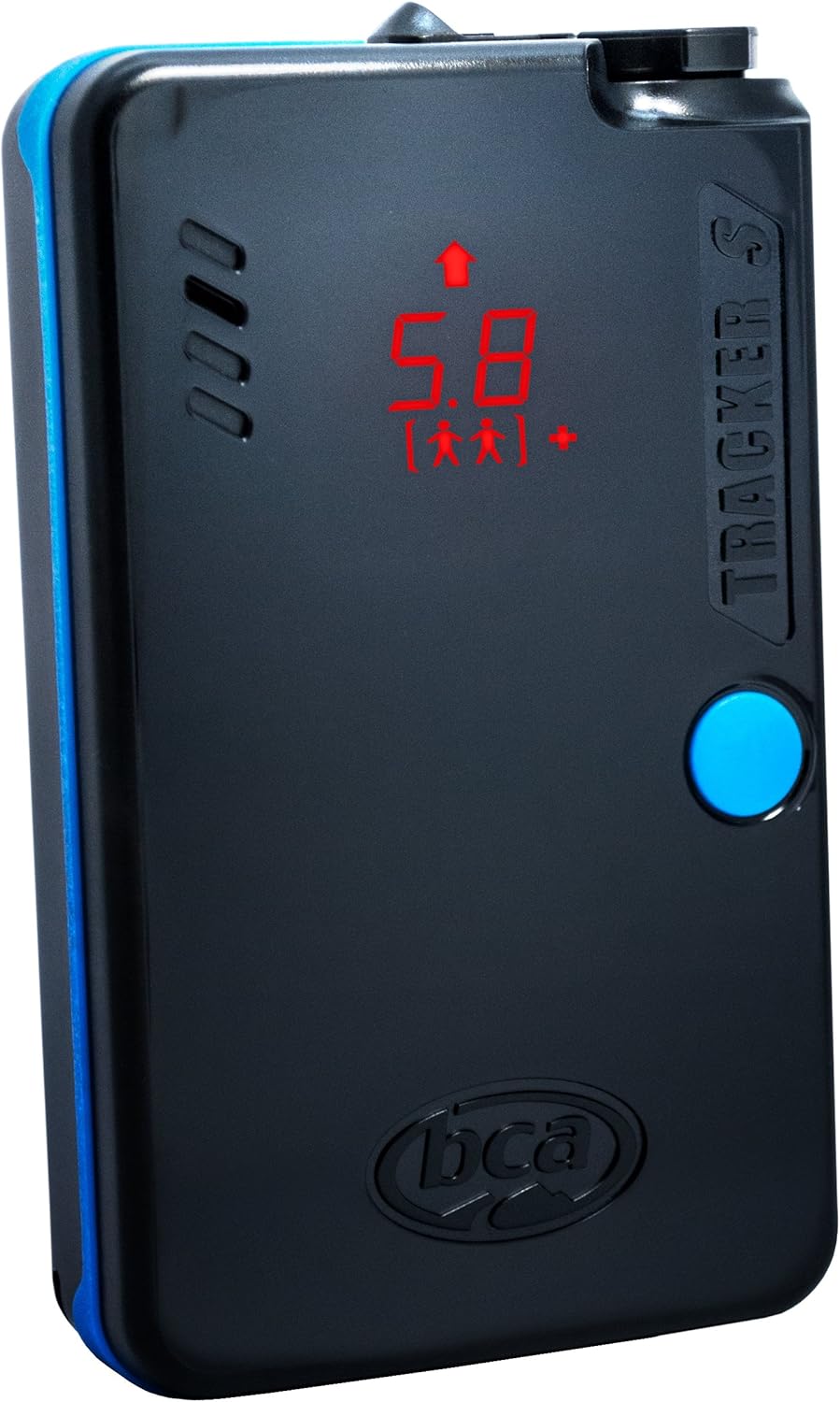
If you’re new to backcountry skiing or splitboarding — meaning you travel in terrain outside ski-area boundaries, where the snowpack isn’t managed and avalanches are a real hazard — you’ve probably already heard that you need a beacon, a shovel, and a probe before you go. A beacon (also called an avalanche transceiver) is a small radio device worn on your body that sends a continuous signal; if you’re buried in an avalanche, your partners switch their beacons to search mode and follow that signal to find you. A shovel digs you out. A probe — a collapsible pole — pinpoints your exact depth before digging begins. Together, they’re called the BSP kit, and no credible instructor, guide, or backcountry partner will let you skip any one of them. This guide focuses on the beacon portion of that kit, specifically on BCA (Backcountry Access) bundles, because BCA is the brand most first-time buyers encounter and most instructors recommend — and because bundle pricing creates real buying decisions worth thinking through carefully.
If you already know what a transceiver is and you’re here to figure out which BCA bundle to buy and why, you’re in the right place. Let’s get specific.
Why BCA Dominates the Beginner-to-Intermediate Conversation
BCA didn’t become the default recommendation by accident. As noted in REI’s Expert Advice piece on avalanche beacons, BCA’s Tracker line earned its reputation through a combination of intuitive search interface design and aggressive bundle pricing that makes the full BSP kit accessible without requiring three separate purchasing decisions. Gear Junkie’s review of the BCA Tracker4 specifically calls out the signal processing and the simplified two-antenna search display as features that perform well for users who don’t practice beacon searches obsessively — which, honestly, describes most recreational backcountry travelers.
The competitive landscape in 2026 still includes Mammut (the Barryvox line), Ortovox (the Diract and 3+ series), and Pieps — all of which have strong followings among guides and ski patrol professionals. But for a first purchase, the tradeoff calculation usually lands on BCA for two reasons:
-
Interface legibility under stress. Avalanche.org’s Know Before You Go curriculum consistently emphasizes that a beacon’s value is only as high as the operator’s ability to use it correctly under adrenaline. BCA’s Tracker interface — large directional arrow, single distance number — is consistently described by instructors as the easiest to interpret when someone is panicking.
-
Bundle economics. BCA sells matched shovel-and-probe kits (the B-1 Ext and the Resort Shovel packages) that reduce total kit cost by roughly $30–60 compared to buying components separately, and they’re sized to work logically together.
The Three BCA Bundle Tiers: What the Math Actually Looks Like
Here’s where intermediate buyers often get stuck: BCA offers bundles across a real price spread, and the naming doesn’t always make the tradeoffs obvious. Let’s run the numbers honestly.
By the Numbers
| Bundle | Beacon | Shovel | Probe | Approx. Street Price |
|---|---|---|---|---|
| BCA Entry (Tracker2 + B-1 + 240) | Tracker2 | B-1 EXT | 240 cm probe | ~$290–$320 |
| BCA Mid (Tracker4 + ST240 + Shaxe) | Tracker4 | Shaxe Tech | 240 cm probe | ~$480–$520 |
| BCA Pro (Tracker4 + aluminum components) | Tracker4 | Resort Alu | 280 cm probe | ~$560–$600 |
(Prices reflect aggregated retail conditions as of spring 2026; street pricing varies by retailer.)
The Tracker2 vs. Tracker4 decision is the one that actually matters, because both bundles use competent shovels and probes. Here’s the honest split:
The Tracker2 is a two-antenna beacon with a simplified search algorithm. It works. Outdoor Online’s gear roundup notes it’s been a reliable workhorse since its introduction, and it still meets every functional requirement for recreational backcountry travel. Its limitation is multiple-burial scenarios: if two or more people are buried, the Tracker2’s signal-suppression algorithm is less sophisticated, which can cause a searcher to circle between signals instead of isolating one victim at a time.
The Tracker4 adds a third antenna and a more advanced signal-marking system that flags located victims so the searcher can focus on the next signal. Backpacker’s explainer on avalanche rescue tools describes this as meaningfully relevant “the moment your group has more than two people in the field” — which is essentially always, since solo backcountry travel is its own risk category nobody recommends.
The honest math: The Tracker4 bundle costs roughly $170–200 more than the Tracker2 bundle. If you’re always traveling in groups of three or more (standard touring protocol), that premium is worth it. If budget is the binding constraint and you’re committed to taking an avalanche rescue course (which you should be regardless), the Tracker2 is not a bad beacon — it’s a previous-generation good beacon.
Shovel and Probe: The Parts Buyers Underweight
Most first-time buyers anchor on the beacon and treat the shovel and probe as afterthoughts. This is the intuition worth correcting before you finalize your kit.
Shovel blade material is a real variable. The BCA B-1 EXT (the entry-bundle shovel) ships with a polycarbonate blade. It works, but as Outside Online’s safety gear roundup notes, plastic blades flex noticeably in hard-consolidated avalanche debris — the kind of dense, cement-like snow that fills a burial pocket. The Shaxe Tech and aluminum shovels in the mid and pro bundles use aluminum blades that hold their geometry under load. Owners who’ve used both consistently report the aluminum version feeling more controlled when you’re moving volume quickly. If you’re buying the entry bundle specifically to save money, consider whether upgrading just the shovel (often a $40–60 delta at retail) makes sense for your use case.
Probe length is not arbitrary. The 240 cm probe in entry and mid bundles handles the statistical majority of burial depths — avalanche.org’s educational materials note that most survivable burials are under 150 cm. The 280 cm probe in the pro bundle is relevant for terrain with deeper burial risk (large slide paths, significant slough accumulation zones). For most recreational touring, 240 cm is adequate.
Probe diameter and material affect packability and stiffness. BCA’s standard probes use 7075 aluminum with a speed-link cable system that reviewers consistently describe as faster to deploy than earlier twist-lock designs. On a first kit, you’re unlikely to notice the difference — but you will notice if your probe doesn’t lock rigid when extended, so stick with current-generation BCA or equivalent; avoid off-brand probes that save $15 at the cost of deployment reliability.
What the Bundle Doesn’t Include (And What You Still Need)
Buying a BCA bundle is a necessary step, not a complete one. This is worth being explicit about, because the framing of “kit” can create a false sense of readiness.
Formal instruction is non-negotiable. Avalanche.org’s Know Before You Go program, the American Institute for Avalanche Research and Education (AIARE) Level 1 course, and the companion Canadian Avalanche Association curriculum all teach beacon search as a practiced skill — not a passive capability. REI’s beacon guide explicitly states that owning a transceiver without practicing the search pattern is “equivalent to buying a fire extinguisher without reading the instructions.” A beacon in your hands for the first time during an actual rescue is a tool you’ll misuse under stress. Most guide services and ski shops run free or low-cost beacon practice sessions; use them.
An airbag pack is a separate decision. BCA also makes the Float airbag line — wearable packs with an inflatable balloon system designed to keep a buried rider near the snow surface during an avalanche. These are a meaningful risk-reduction tool (outside Online’s safety gear coverage notes the statistical survival-rate improvement in deployable scenarios), but they’re a $600–$1,200 add-on decision with their own tradeoffs around canister type, trigger mechanism, and pack volume. That decision belongs in a separate buying guide; don’t let it block you from completing your BSP kit first.
Helmet, probe pole confusion, and gloves. These come up in every forum thread. A ski helmet is upstream of beacon kit — it’s day-one gear. Trekking poles are not probes; they don’t lock rigid at depth and they’ll cost you critical seconds. And bare hands in cold snow debris are slower and more error-prone than thin glove liners — own them.
The Decision Rule: If X, Then Y
You’ve read the specs. Here’s how to make the call cleanly.
If you’re a first-time backcountry buyer on a strict budget and you’re committed to taking an AIARE Level 1 course: The Tracker2 bundle gets you legally and ethically into the backcountry while you build skills. Revisit the Tracker4 before your second or third season, when you’ll have enough context to appreciate the upgrade.
If you’re buying gear to match a partner or group already running the Tracker4: Buy the Tracker4 bundle. Multiple-burial search interoperability isn’t a hypothetical — it’s what every coherent group needs to function as a rescue unit, not just a collection of individuals with beacons.
If budget allows and you’re treating this as a long-term kit: The Tracker4 mid bundle (approximately $480–520 street in 2026) hits the sweet spot. The aluminum shovel is meaningful. The probe is proven. The beacon is current-generation. Buy it, take a course, and practice every season.
If someone in your party has a beacon from before 2018: That’s a compatibility conversation worth having with a gear shop before you finalize your purchase. Older analog beacons and some early digital models can create signal interference during group searches. Gear Junkie’s Tracker4 review flags this as an edge case that’s still worth surfacing before a trip.
The backcountry safety kit is not a purchase you make once and file away. It’s a commitment to a skill set, a group culture, and an annual practice habit. BCA has made the hardware side of that commitment more accessible and less intimidating than it’s ever been — the bundle model removes friction, the Tracker interface removes guesswork, and the price tiers remove the “I don’t know what I’m comparing” paralysis that stalls most first-time buyers. Get the kit that matches your group’s needs, take the course, and get out there.