Most people know that a beacon (short for avalanche transceiver — a device that transmits your location and can be switched to receive signals from a buried person) is the first thing you buy before heading into avalanche terrain. But a beacon alone won’t save you. It tells rescuers where you are; it doesn’t dig you out. The rest of the kit — a probe (a collapsible pole for pinpointing exact burial depth before digging), a shovel (self-explanatory, but the engineering matters enormously), and increasingly a radio or satellite communicator (so you can call for help when cell service ends at the trailhead) — is where people skimp, improvise, or buy once without thinking it through. This guide is for the person who already owns a beacon or is buying the full kit at once: we’ll walk through what the tradeoffs actually are, show the math on where to spend, and give you clear decision rules for gifting at every level.
Probes: Length, Material, and Why “Fast Enough” Is the Only Standard That Matters
A probe looks like a tent pole. It collapses to about 40–45 cm, deploys to 240–320 cm, and locks rigid so you can push it through compacted snow to find a buried person — or confirm depth before you commit your shovel angle. The spec that matters most isn’t the one most buyers look at first.
The tradeoff buyers miss: locking speed vs. weight vs. stiffness.
Probe deployment systems fall into two camps. Wire-pull probes (like the Black Diamond QuickDraw series) lock all segments in a single pull of a central cable — owners consistently report sub-five-second deployments even with gloves on, which is what the AIARE avalanche curriculum emphasizes as the practical standard. Push-button or sleeve-lock designs are lighter and cheaper but require individual segment locking; Gear Junkie’s 2025 probe roundup notes that sleeve designs “add meaningful seconds under stress, which is the only condition that counts.”
On length: 240 cm is the minimum worth buying. At 320 cm, you can reach burial depths that cover the majority of avalanche scenarios — avalanche.org’s data consistently shows median burial depths well within this range, but outlier deep burials do happen, and a probe that bottoms out before you hit the victim wastes time. The weight penalty between 240 cm and 320 cm in carbon fiber is roughly 30–40 grams — meaningless in a pack, meaningful in your hands after 20 minutes of searching.
Material comparison by budget tier:
| Material | Typical Weight (320 cm) | Stiffness | Price Range |
|---|---|---|---|
| Aluminum | ~290–330 g | Good | $35–$55 |
| Carbon fiber | ~190–240 g | Very good | $65–$120 |
| Carbon composite | ~220–260 g | Excellent | $80–$130 |
If X, then Y: If you’re gifting a first-timer building their first kit, a 240 cm aluminum wire-pull probe in the $35–$50 range is the right call — it deploys fast and won’t break the overall kit budget. If your recipient is a dedicated ski tourer doing multi-day objectives, the weight savings and stiffness of carbon at $80–$100 are genuinely worth it. Outside Online’s 2025 safety gear review identifies the BCA Stealth 300 and Black Diamond QuickDraw Pro as the probes most consistently recommended by guide services for their deployment speed — both use wire-pull systems.
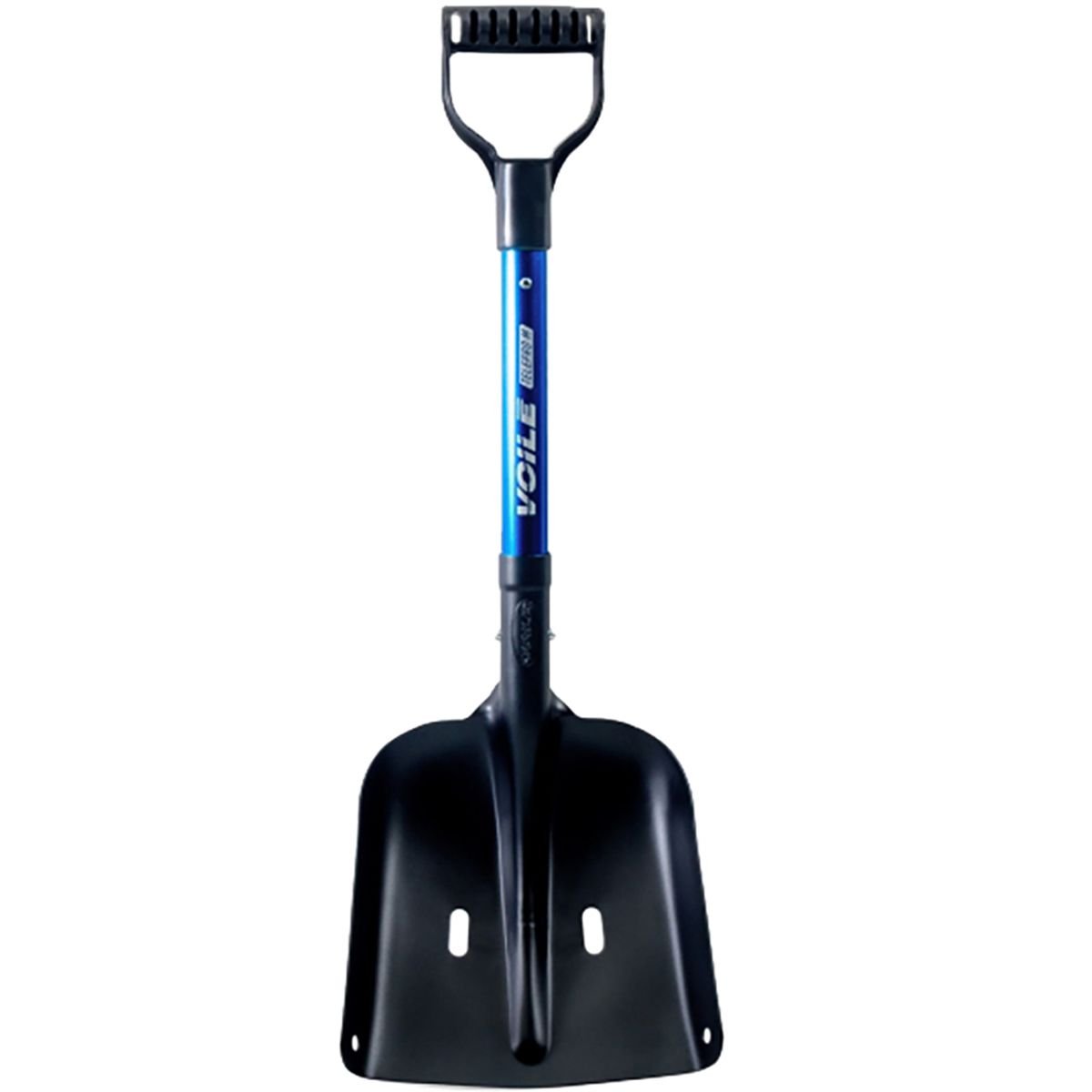
Shovels: The Component That Actually Saves Lives, and Where People Chronically Under-Invest
Backcountry rescue data is unambiguous on this point. Survival rates in avalanche burials drop steeply after 15 minutes — avalanche.org’s survival curve data shows roughly 90% survival at 15 minutes, dropping toward 50% by 30 minutes as asphyxiation becomes the dominant cause of death. The shovel is the bottleneck. A probe takes seconds. A beacon search, done right, takes two to four minutes. Everything after that is shoveling, and shoveling compacted avalanche debris is like digging concrete.
The tradeoffs nobody tells you:
Blade size is more important than handle length for gifting decisions. A small blade — typical of “ultralight” travel shovels — limits snow displacement per stroke. Backpacker Magazine’s 2025 avalanche gear guide notes that testers consistently flagged small-blade shovels as the single most common equipment regret in post-burial debriefs. Look for a blade area in the 600–700 cm² range minimum.
Telescoping handle length determines leverage. A handle that extends to 70 cm or longer lets a rescuer use body weight efficiently. Fixed-length handles save pack space but sacrifice mechanics when you’re fatigued.
D-grip vs. T-grip: D-grips (the closed loop handle) give more torque for chopping consolidated snow — owners on REI product pages for the Black Diamond Deploy and Ortovox Pro Alu III consistently call this out as the deciding factor after their first real dig. T-grips are lighter and pack flatter. For gifting to someone doing serious objectives, D-grip wins.
Shaft material: Aluminum shafts are standard and reliable. Carbon shafts save 100–150 grams and cost $30–$50 more — worth it for weight-obsessed ski mountaineers, unnecessary for everyone else.
By the numbers:
- Minimum recommended blade area: ~600 cm²
- Meaningful handle extension: 65–75 cm extended
- Weight range worth accepting: 600–900 g (sub-500 g shovels typically compromise blade size)
- Price sweet spot for a full-featured shovel: $65–$110
If X, then Y: If the recipient is a recreational sidecountry skier (meaning they access lift-served terrain that borders avalanche zones), a mid-range shovel like the Black Diamond Deploy 3 or BCA Operator at $65–$80 covers every realistic scenario and deploys intuitively. If they’re a ski guide, splitboarder, or anyone running group rescues, spend to $100–$130 for a larger blade, D-grip, and convertible-to-hoe function — the Ortovox Beast and Black Diamond Transfer series both get strong marks from guide community reviewers for the extended blade and chopping capability.
Radios and Satellite Communicators: The Component That’s Changed the Most
Five years ago, this category meant handheld VHF radios for same-group communication. Today, the more important question is satellite two-way messaging — devices that let you send and receive text messages and trigger emergency SOS responses from anywhere on the planet, no cell tower required. If you’re gifting backcountry safety gear in 2026, this is where the meaningful upgrade conversation lives.
Handheld VHF radios (walkie-talkies): Still relevant for group coordination in terrain where parties split up. Brands like Motorola T-Series and Midland GXT cover the recreational end ($40–$80 for a pair); BCA’s BC Link and similar backcountry-specific radios add better range and weather resistance in the $80–$120 single-unit range. The limitation: range-of-sight communication only, no off-grid emergency function. Owners in aggregated reviews praise them for simple group-day use, but consistently flag the lack of emergency reach as the gap.
Satellite communicators — the real decision: The two dominant platforms in 2026 remain Garmin inReach (using the Iridium satellite network for global two-way messaging) and SPOT by Globalstar. A strong third option has emerged with the Zoleo and ACR Bivy Stick for subscription-light users.
The tradeoff here is subscription cost vs. capability vs. form factor:
- Garmin inReach Mini 2: The most widely reviewed option at the premium end (~$350–$400 device, $15–$65/month depending on plan). Owners consistently report reliable two-way messaging, accurate GPS tracking, and the ability to pair with a phone for longer message composition. Outside Online calls it “the default recommendation” for serious backcountry users.
- SPOT Gen4: Lower device cost (~$150–$180) but one-way messaging only — you can send a pre-set “I’m OK” or trigger SOS, but you cannot receive replies. Meaningful limitation if you need to coordinate with rescuers or communicate conditions.
- Zoleo: Sits between the two at ~$200 device + lower subscription tiers, with true two-way messaging. Gear Junkie’s 2025 communicator review notes it as “the most underrated value pick” for skiers who want full two-way without the Garmin price point.
Apple Emergency SOS via Satellite (built into iPhone 14+) is not a substitute. It provides emergency SOS and crash detection satellite relay — valuable, but not a two-way communication platform and not a substitute for dedicated device reliability in a rescue scenario. This distinction matters in gifting conversations.
If X, then Y: If the recipient already carries an iPhone 14 or later and does occasional sidecountry days, the Zoleo at $200 + a basic subscription covers the gap affordably and adds real two-way reach. If they’re doing serious alpine objectives, multi-day ski tours, or guiding professionally, the Garmin inReach Mini 2 is the right answer — the subscription pays for itself on the first trip where you need it. Don’t gift SPOT Gen4 to anyone who might be in a scenario requiring two-way coordination; the one-way limitation is a real constraint, not a marketing distinction.
Building the Full Kit: Where the Money Goes
A complete non-beacon safety kit — probe + shovel + communicator — can run $150 to $600+ depending on tier. Here’s how to think about allocation:
Entry kit (~$150–$200 total): Aluminum probe with wire-pull ($40), mid-range shovel with D-grip ($70), SPOT Gen4 or Zoleo basic (~$50–$80 device amortized). Covers a recreational sidecountry skier making occasional forays. Acceptable for gifting when the full budget is constrained.
Recommended kit (~$275–$375 total): Carbon probe ($85), full-featured shovel with large blade ($95), Zoleo communicator (~$200 device + subscription). This is the configuration that shows up most consistently in guide service gear lists and in aggregated owner reviews as the “no-regret” setup.
Premium kit (~$500–$650+ total): Carbon composite probe ($120), professional shovel with hoe conversion ($130), Garmin inReach Mini 2 (~$350–$400). The right answer for anyone doing serious objectives, ski mountaineering, or guiding work. The AIARE Level 1 curriculum explicitly recommends carrying every component of this kit — and treating it as non-negotiable, not aspirational.
The decision rule that ties it together: Match the kit to the terrain, not the budget. If your recipient is accessing genuine avalanche terrain — not just groomed runs with a symbolic backcountry detour — start at the recommended kit and work up. Under-speccing the shovel to save $30 is the mistake that shows up in rescue debriefs. The probe and communicator are more forgiving of budget tradeoffs. The shovel is not.
Sources: American Institute for Avalanche Research and Education (AIARE), Avalanche Curriculum Overview, 2025 edition; avalanche.org Know Before You Go resources; aggregated owner reviews via REI.com product pages for Black Diamond, BCA, and Ortovox categories; Outside Online “Backcountry Safety Gear Tested and Reviewed” 2025; Backpacker Magazine “Best Avalanche Safety Gear of 2025”; Gear Junkie “Best Avalanche Probes: How to Choose Length, Material, and Speed” 2025.