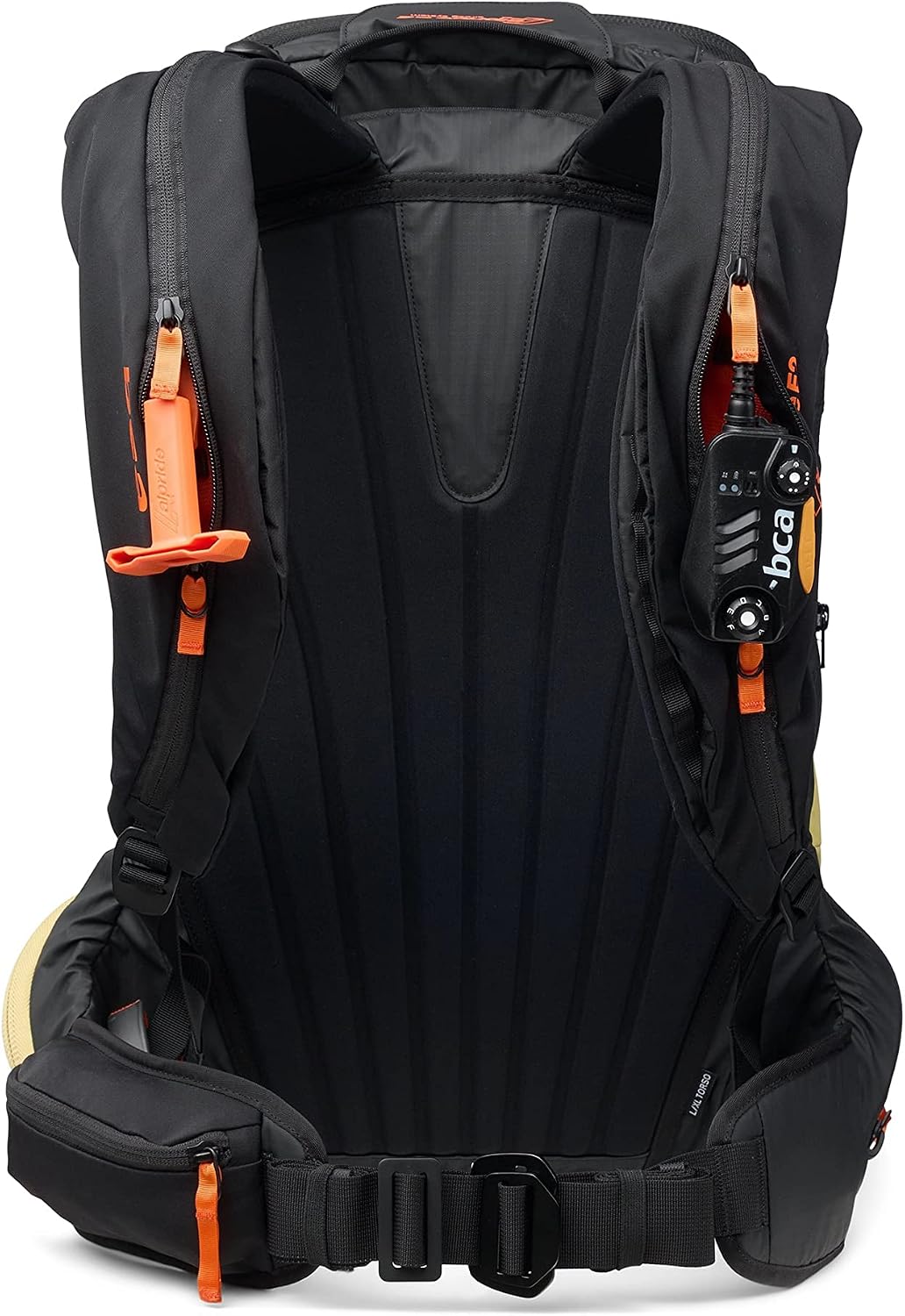
If you’ve spent any time in avalanche terrain — meaning off-piste ski runs, backcountry snowshoeing routes, or sidecountry zones accessed through resort gates — you’ve probably heard the phrase “airbag pack.” Here’s what that means in plain terms: an avalanche airbag pack is a backpack with an inflatable balloon system built in. When an avalanche (a mass of snow sliding down a slope) catches you, you pull a trigger handle, the balloon inflates in about three seconds, and the extra volume helps push you toward the surface of the moving snow rather than burying you beneath it. It’s not a guarantee of survival — avalanche.org’s Know Before You Go program is clear that no single piece of gear replaces terrain judgment and companion rescue skills — but across aggregated incident data, airbag deployment is consistently associated with improved survival outcomes. The BCA Float E2 is one of the most accessible electric-trigger airbag systems on the market in 2026, and this guide exists to help you decide whether it’s the right system for your specific riding style, your pack volume needs, and your budget before you drop $1,000 or more.
What “Electric Trigger” Actually Means — and Why It Changes the Math
The BCA Float E2 uses an electric motor-driven fan to inflate its airbag, rather than a compressed-gas canister. That distinction has downstream effects on nearly every purchase variable.
The old canister model used a pressurized cylinder of compressed gas (either nitrogen or air) to blast the balloon open. Canisters work reliably in cold temperatures, inflate fast (around 2–3 seconds), and don’t need a battery charge. The tradeoff: you can’t fly with a charged canister, refilling requires a certified shop or mailing the canister back to the manufacturer, and you get one deployment per canister unless you pay to repack it.
The electric model — which BCA calls the Float E2 system — uses a rechargeable lithium-ion battery and a motorized fan impeller to draw in ambient air and pressurize the bag. Gear Junkie’s electric vs. canister airbag comparison guide notes the key advantages: you can fly with the pack (just remove the battery per TSA/airline rules), you can do practice deployments repeatedly without paying for a repack, and the battery charges via USB-C. The tradeoff that every honest reviewer flags: cold temperatures reduce battery performance, and if you forget to charge the pack, you have no system. Outside Online’s feature on the electric airbag era quotes multiple guides noting that the discipline of charging the pack before every tour is the new “check your beacon” ritual — a behavioral overhead that gas-canister packs don’t impose.
The inflation speed question: The BCA Float E2’s fan system is manufacturer-rated at approximately 3 seconds to full inflation. Published specs put the airbag volume at 150 liters when deployed — the same volume across the E2 line regardless of pack size. That’s a meaningful spec: the airbag’s buoyancy effect is a function of total deployed volume, not the pack size you’re wearing.
The Volume Decision: Which Float E2 Pack Size Actually Fits Your Tour
BCA offers the Float E2 system in three main carry volumes as of the 2025–26 season: 25L, 32L, and 42L. The airbag system and trigger are identical across all three; what you’re choosing is how much gear you can carry before the airbag occupies its dedicated internal compartment.
By the Numbers: Float E2 Pack Lineup
| Model | Carry Volume | Airbag Volume | Approx. Retail (2026) |
|---|---|---|---|
| Float E2 25 | 25 liters | 150 liters deployed | ~$999–$1,049 |
| Float E2 32 | 32 liters | 150 liters deployed | ~$1,049–$1,099 |
| Float E2 42 | 42 liters | 150 liters deployed | ~$1,099–$1,149 |
(Prices reflect manufacturer MSRP as of May 2026. Street pricing varies by retailer.)
REI’s expert advice guide on choosing an airbag pack lays out the volume-to-use-case logic cleanly: day tours with a guide or in a well-organized group require less personal carry volume because safety gear and food can be distributed. Solo tours, multi-pitch ski mountaineering days, or tours where you’re carrying a full emergency kit — beacon, shovel, probe, first-aid, emergency bivy, nutrition, hydration, and layers — push toward the 32L or 42L.
The practitioner decision frame here is straightforward:
- 25L is the right call if you’re primarily a lift-accessed backcountry rider (resort sidecountry, short approach zones) who carries lean — a shovel, probe, one extra layer, water, and snacks. Owners of the 25L consistently report that it sits well on the body for aggressive skiing because there’s less mass shifting behind you.
- 32L is the most common choice for all-day ski tours and the size that draws the most positive reviews across aggregated ski media coverage. Powder Magazine’s 2024 season roundup flagged the 32L as the “daily driver” volume for guides and frequent backcountry skiers — enough room for a full kit without the weight penalty of the 42L.
- 42L makes sense if you’re regularly breaking trail on overnight-adjacent tours, skiing remote zones where you’ll carry emergency overnight gear, or if you’re a snowboarder who hauls a splitboard carry system. Owners report that the 42L’s frame sheet and hip-belt load transfer become meaningfully better than the 25L in the $30+ load range.
The Trigger System and Battery: What Can Actually Go Wrong
The E2’s trigger is a right-shoulder pull handle connected to the motor activation circuit. BCA’s published documentation specifies that the battery provides enough charge for multiple full deployments per charge cycle — the stated figure across manufacturer materials is approximately 5+ deployments per charge. That sounds like headroom, but the practical risk flag that Outside Online and Gear Junkie both surface in their coverage is this: cold soak kills lithium-ion capacity faster than most users expect.
A battery sitting in a -20°C (-4°F) overnight car or gear room can lose 20–30% of usable capacity before you even start your tour. That doesn’t mean the system fails — reviewers and guides report it still deploys reliably in typical backcountry temps — but it means the “5 deployments per charge” spec is a warm-temperature number. The practical guidance from multiple guide services cited in Outside Online’s coverage: charge the night before, keep the battery in a warm interior pocket if temps are extreme, and treat the pack like you treat your beacon — check it before every single tour without exception.
Practice deployment costs: Unlike a canister system where a practice pull means a $50–$100 repack fee, the E2 lets you practice for free. REI’s airbag pack guide emphasizes this as a genuine safety advantage: riders who have actually deployed their airbag in a controlled setting respond faster in the field. The behavioral case for electric systems partly lives here — the barrier to practicing is gone.
One tradeoff worth naming explicitly: if your battery is dead and you can’t source a USB-C charge before your tour starts, you have no airbag. A canister pack in that scenario still functions. This is not a reason to dismiss the E2 — it’s a reason to build a charging habit into your gear prep workflow the way you’d build it into your phone or beacon routine.
How the Float E2 Compares Against the Field
The BCA Float E2 doesn’t exist in a vacuum. The two competitors most commonly evaluated against it in the current market are the Mammut Free 3.0 (electric, Bluetooth trigger activation) and the Ortovox Avabag LiTRIC (electric, fan system). A few honest comparison points based on published specs and aggregated reviewer coverage:
Mammut Free 3.0: Uses an app-connected Bluetooth trigger as its primary activation method, with a manual backup. Owners in long-run reviews on gear forums and in Outside Online coverage consistently flag the Bluetooth activation as a source of anxiety — not because it fails, but because the cognitive overhead of “is my phone connected right now” adds a variable. The BCA’s simple mechanical pull handle removes that variable entirely. The Mammut carries at a slightly higher MSRP and offers a comparable deployed volume.
Ortovox Avabag LiTRIC: Also electric fan, with a dedicated trigger handle. Ortovox has strong reputation equity in the avalanche safety space (their rescue gear is consistently cited by avalanche.org education partners). The LiTRIC’s carry volume options and hip-belt ergonomics are frequently praised by reviewers, and it competes directly with the Float E2 32L at a similar price point. The decision between BCA and Ortovox at this tier often comes down to brand ecosystem: if you’re already invested in BCA beacon and probe infrastructure, the Float E2 keeps your system coherent.
The honest summary from aggregated coverage: In the electric airbag segment under $1,200, the BCA Float E2 is consistently rated as one of the most intuitive trigger systems available, with straightforward charging and no connectivity dependencies. It’s not the only right answer, but it’s the one with the lowest operational complexity.
The Full Cost of Ownership: What $1,000+ Actually Includes
The sticker price on an airbag pack is the beginning of the conversation, not the end. Here’s how the math actually lands:
- Pack purchase: $999–$1,149 depending on volume tier (2026 MSRP)
- Replacement battery: BCA sells the E2 battery separately; budget ~$100–$150 for a spare if you tour frequently enough that a single-battery charging schedule feels like a risk
- Travel considerations: The battery ships separately or stays home if you’re flying; budget for no additional repack fees (unlike canister systems), which is a genuine long-run savings
- Companion safety gear if not yet purchased: avalanche.org’s education materials frame the airbag as the third purchase in a backcountry safety system, after a transceiver (beacon) and a shovel-probe kit. If you’re buying the Float E2 as your entry into avalanche safety gear, budget for a full kit: a beacon ($300–$450 range), a probe and shovel combo ($100–$200 range), and a Level 1 avalanche course ($200–$400 depending on provider). The pack without the full system and the education is an incomplete investment.
If X, Then Y: The Decision Rules
You’ve done the reading. Here’s where it lands:
If you’re a frequent backcountry skier doing 15+ tours per season in moderate to serious avalanche terrain, and you want the lowest operational friction electric system available: the Float E2 32L is the version to buy. It’s the volume sweet spot, it’s the most-reviewed size in the line, and the electric trigger removes repack costs over a 3–5 season horizon.
If you’re a sidecountry or resort-adjacent rider who tours occasionally and wants airbag coverage without the bulk: the Float E2 25L keeps the system light and the price at the lower end of the range. Owners report it skis closer to a non-airbag pack than any other size in the line.
If you’re regularly doing full-day wilderness tours with significant gear loads: the Float E2 42L or a look at the Ortovox LiTRIC’s comparable volume tier is worth the comparison. Don’t underbuy volume and then fight the pack.
If battery discipline is a genuine concern for you — you forget to charge devices, you’re irregular about gear prep — consider whether a canister-based system’s “always ready” characteristic is actually worth the repack cost and travel complexity for your specific touring pattern. The best airbag system is the one you’ll actually maintain correctly.
The avalanche airbag market has matured to the point where a $1,000+ electric system is a reasonable, well-documented purchase. The BCA Float E2 is one of the cleaner executions of that technology. The job before you buy is matching the right volume to your actual touring kit, not the touring kit you wish you had.